Personal project · a two-year learning journey
Tars
A connected planter born from one dead snake plant, built by learning every layer that stood between the idea and a working object.
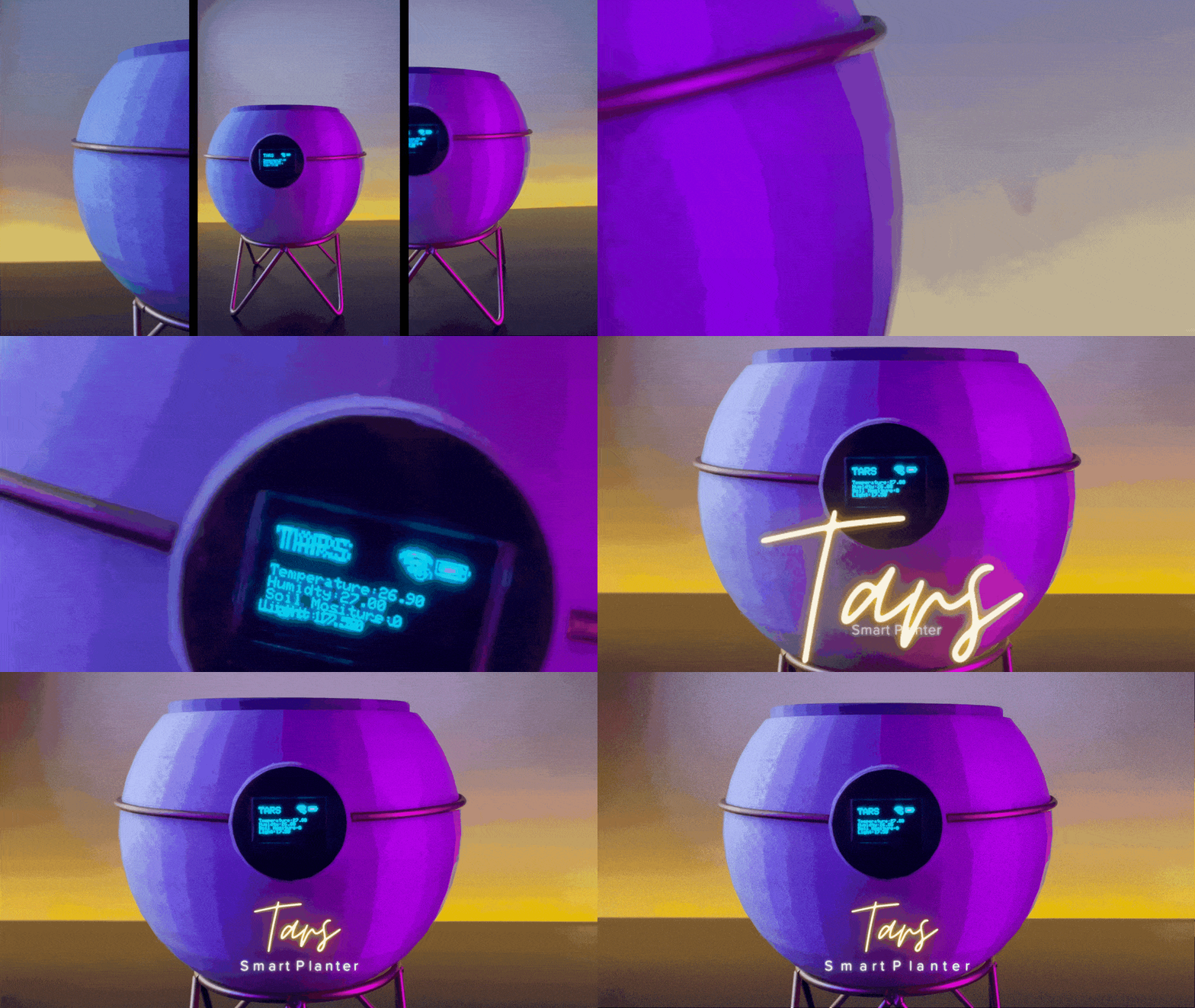 Physical object + live sensing + digital guidance
01 / ORIGIN
The project started with regret.
A close friend gave me a snake plant for my birthday. I watered it every day and kept it indoors with very little light. It died from root rot.
That mistake became a question: could technology make the conditions around a plant visible before the damage became obvious? Answering it meant teaching myself Arduino, IoT, web development, AI integration and 3D modelling—and continuing to iterate for the next two years.
02 / BUILDING THE OBJECT
Sketch. Wire. Print. Break. Repeat.
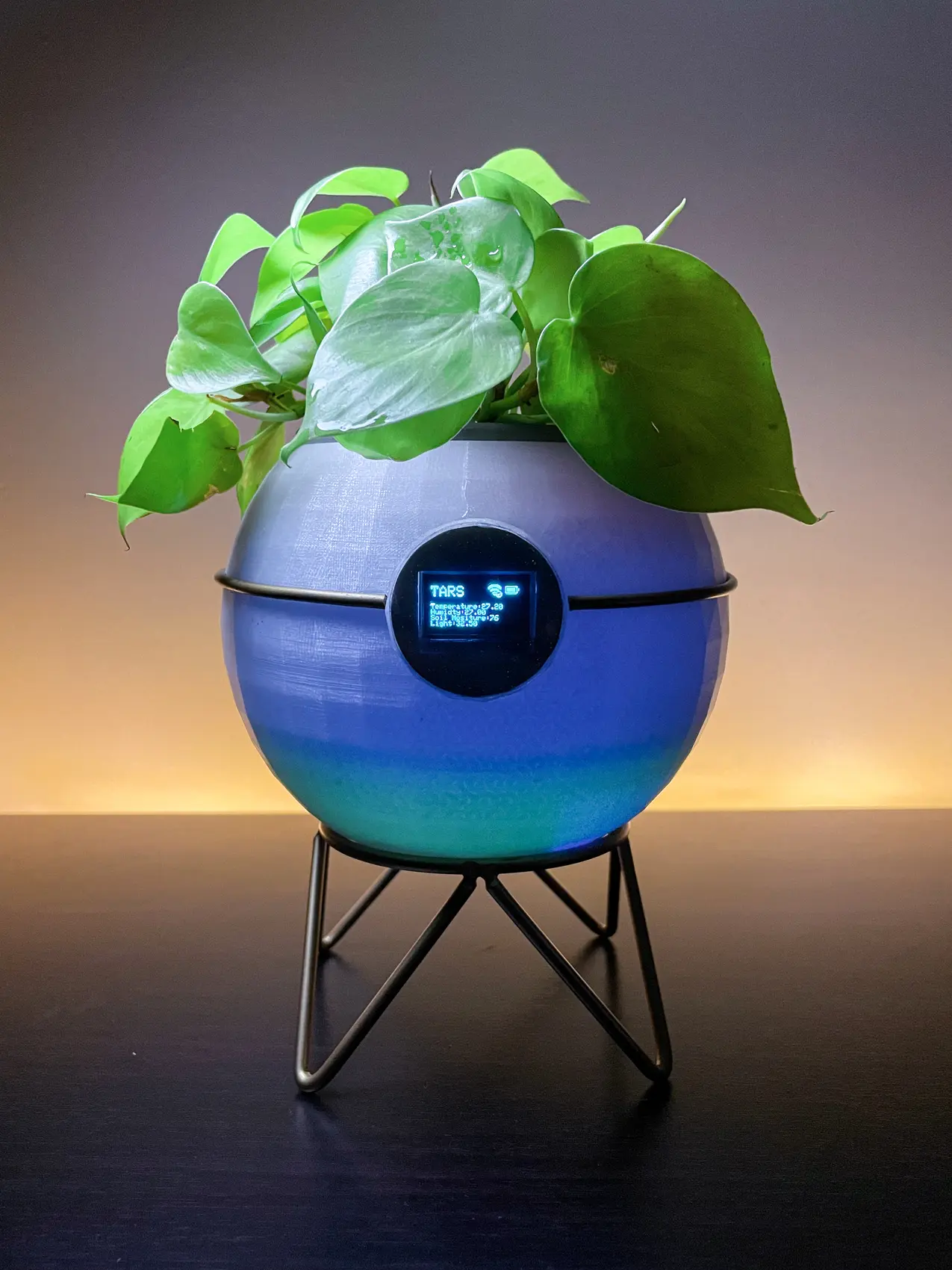
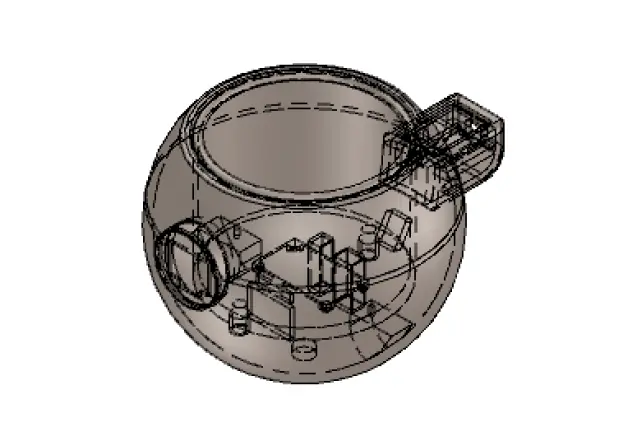
The spherical PLA enclosure was designed around the electronics, OLED and plant. Breadboard tests established the shared I²C bus, sensor behaviour and a stable 3.3 V supply. Dry fitting, sanding and a gold-painted wire stand turned the prototype into a calm household object rather than a visible electronics experiment.
03 / THE CONNECTED EXPERIENCE
No app install. No credentials in code.
On first boot, Tars creates its own access point and displays a QR code on the OLED. A local page collects the home Wi-Fi details, stores them in EEPROM and reconnects automatically. A physical reset button clears the saved network when the planter moves.
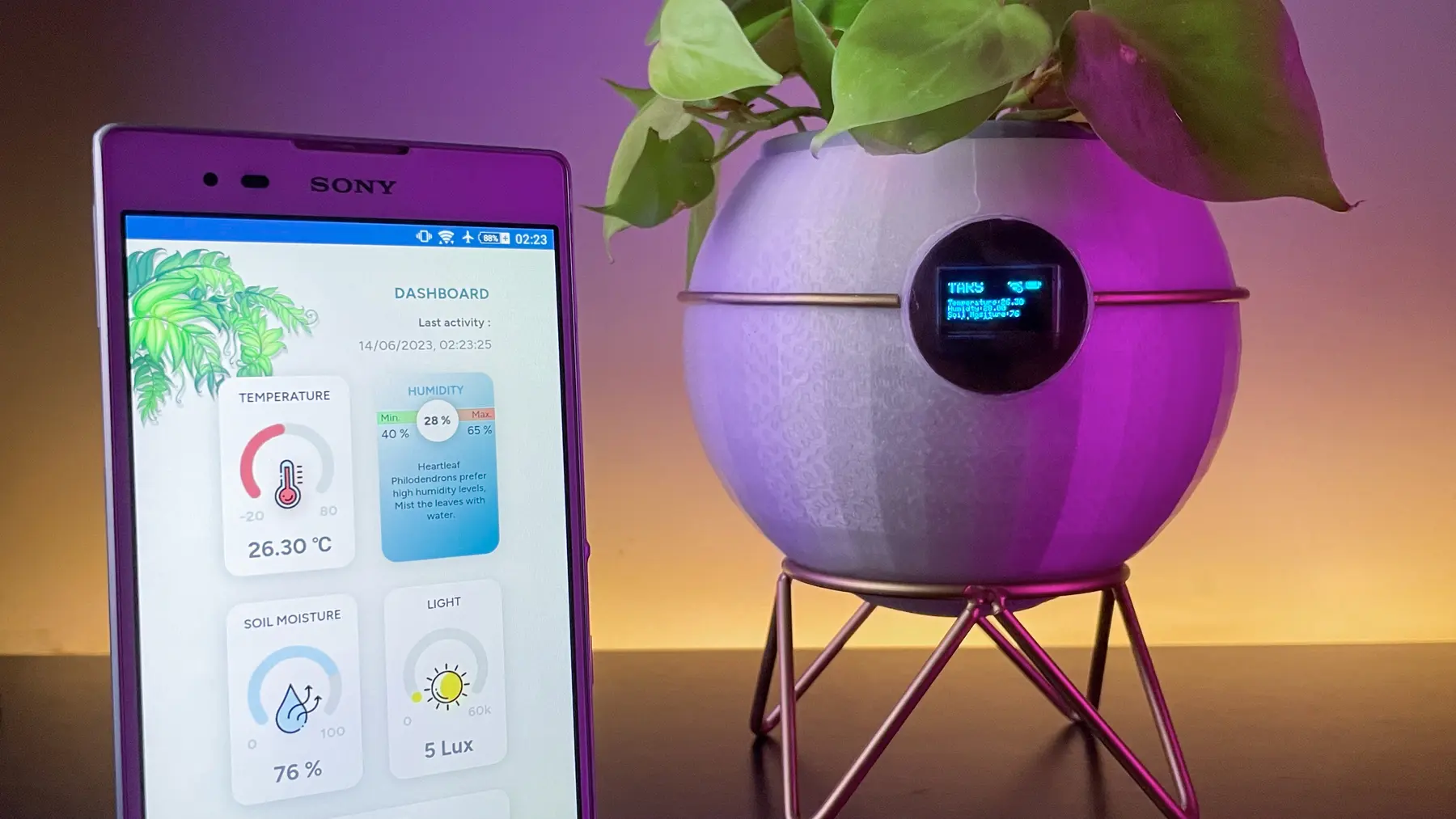
Readings are sent only when values change, reducing unnecessary network activity. The Node.js and Express web experience combines live gauges, local weather, plant information and AI-assisted care guidance—moving the interface from “what is the number?” toward “what should I do?”
04 / WHAT VERSION ONE TAUGHT ME
A complete system also reveals its weakest decisions.
01The planter was too tied to one pot. Repotting meant disturbing both the plant and electronics.
02The enclosure was bulky. The product worked, but portability and serviceability needed a new architecture.
03Power shaped everything. A small battery and always-on behaviour pushed the next version toward deep sleep and solar assistance.
04Monitoring is only the first step. Good data needs plant context and clear, actionable guidance.