110° charging module
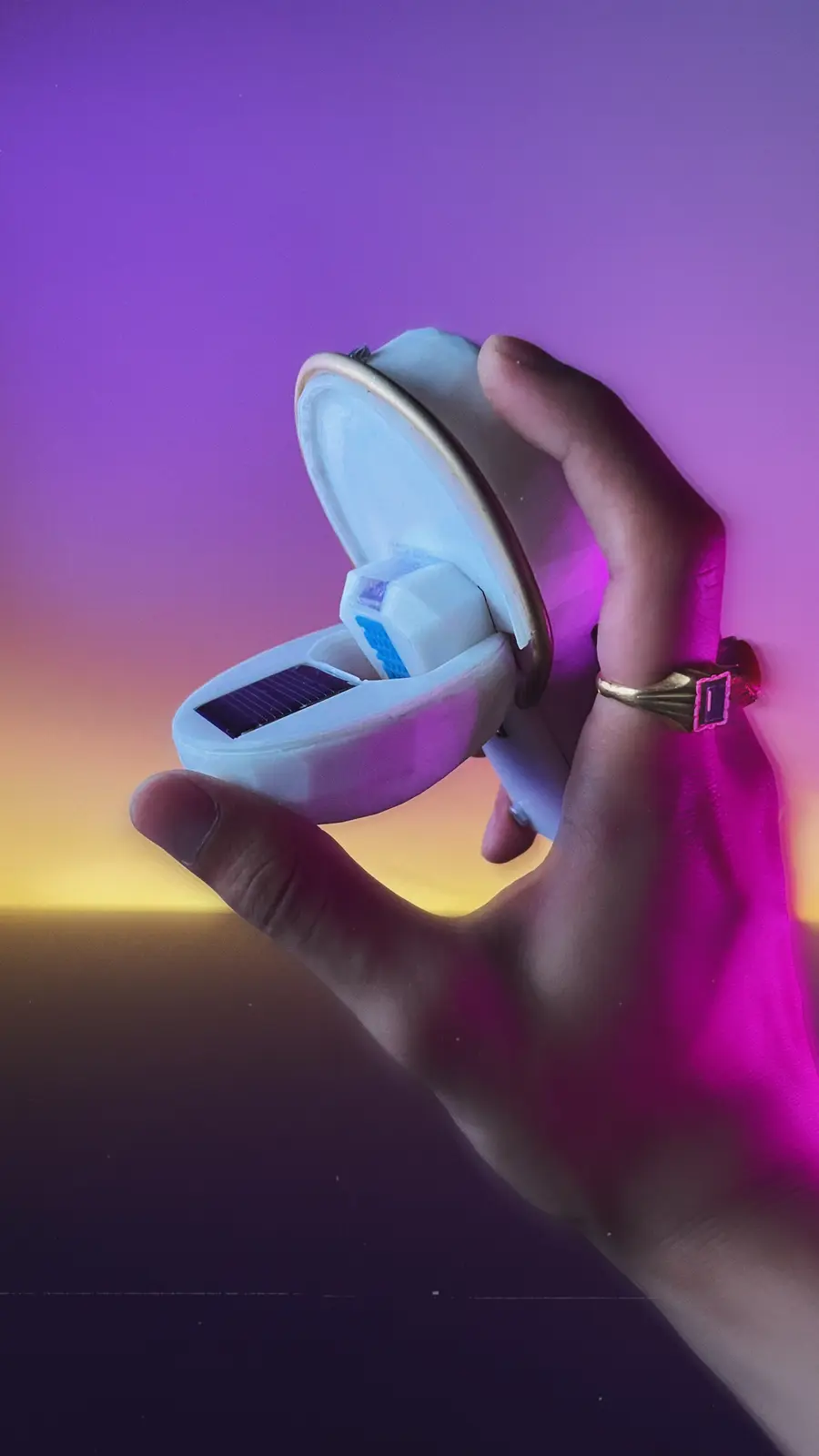
A geared shaft lets the solar enclosure rotate toward available light.
Personal project · patented evolution
A compact plant-care device that brings real-time sensing and AI-assisted guidance to the planter you already own.
01 / THE PRODUCT DECISION
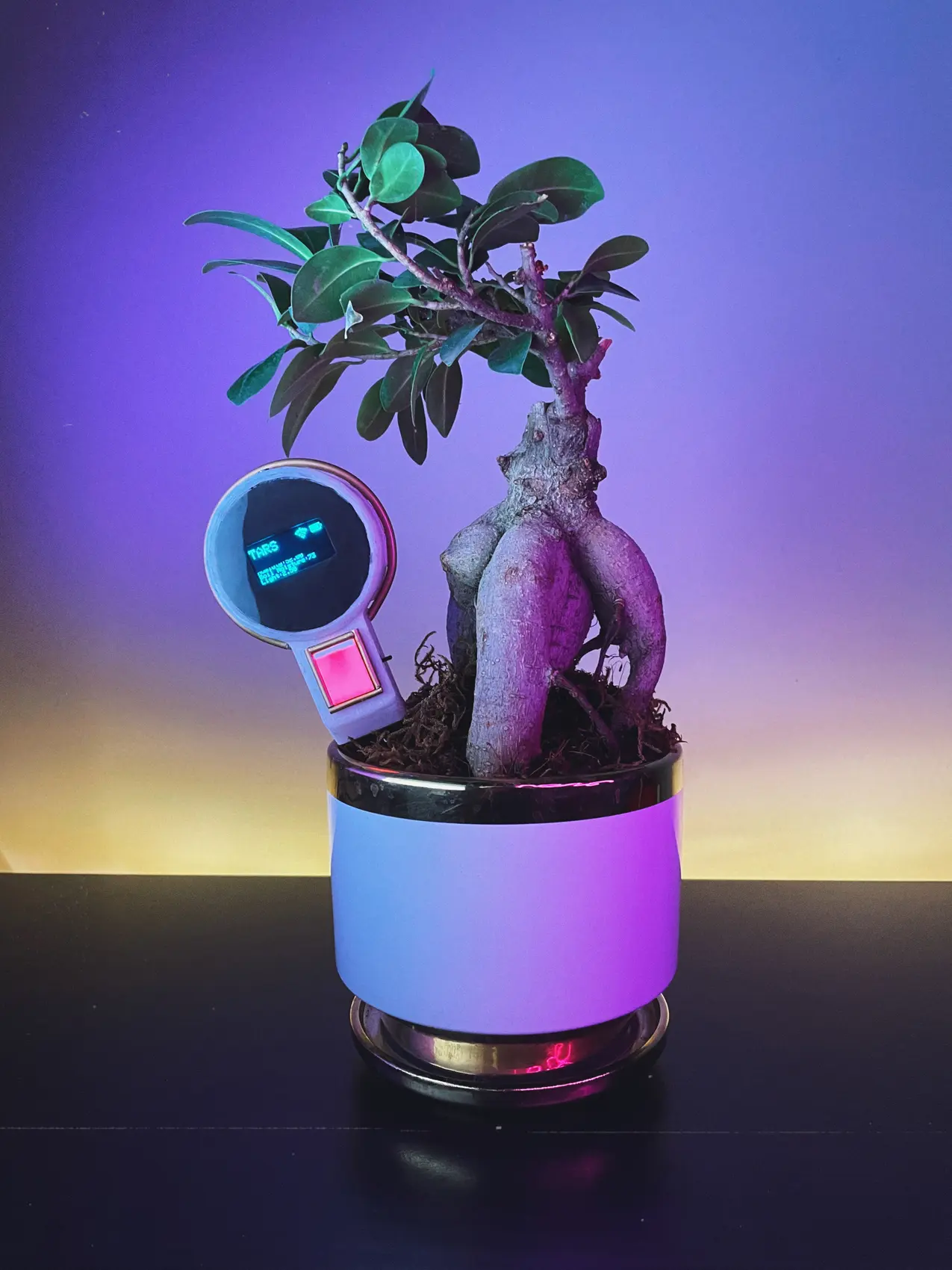
Tars proved the value of sensing, but its intelligence was locked inside a bulky pot. Tars Portable separates the monitoring system from the planter so it can be inserted, removed, charged and moved without repotting.
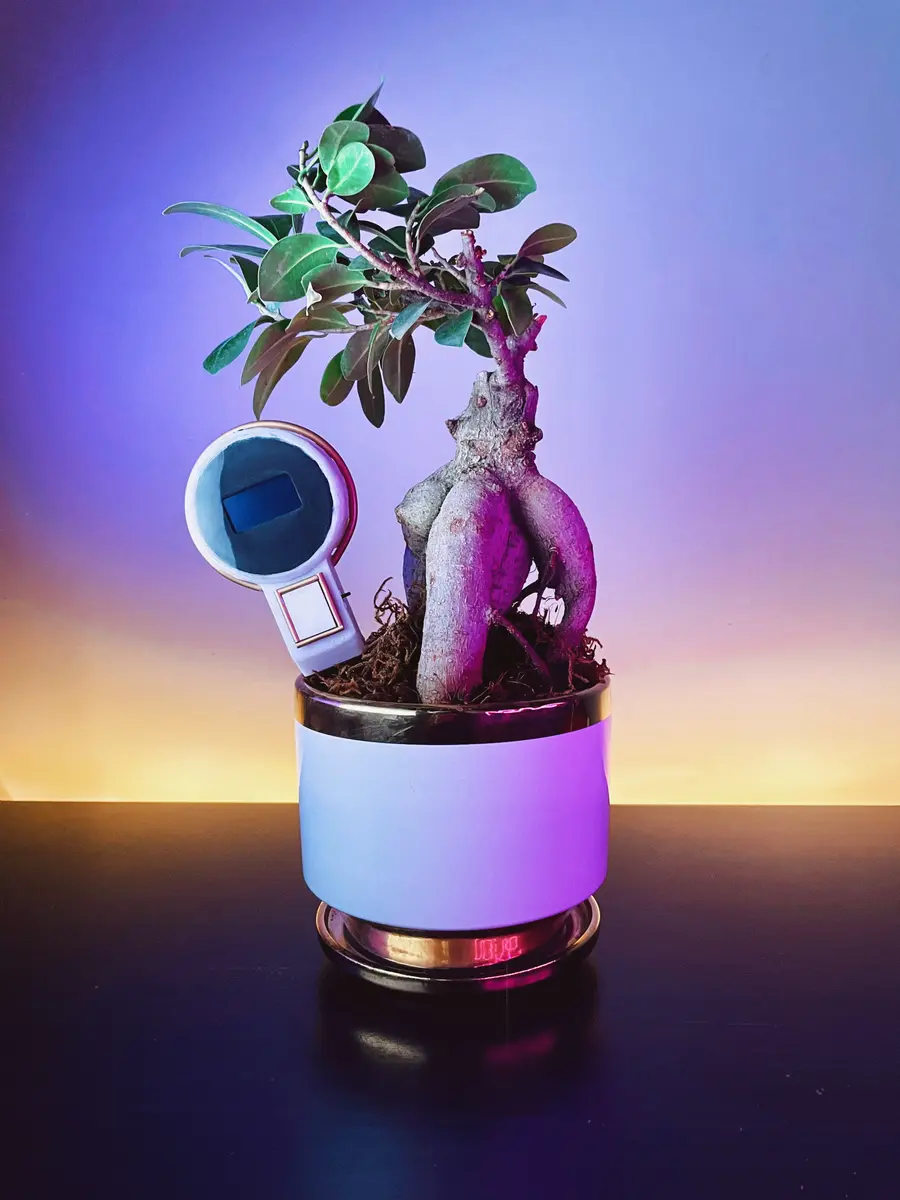
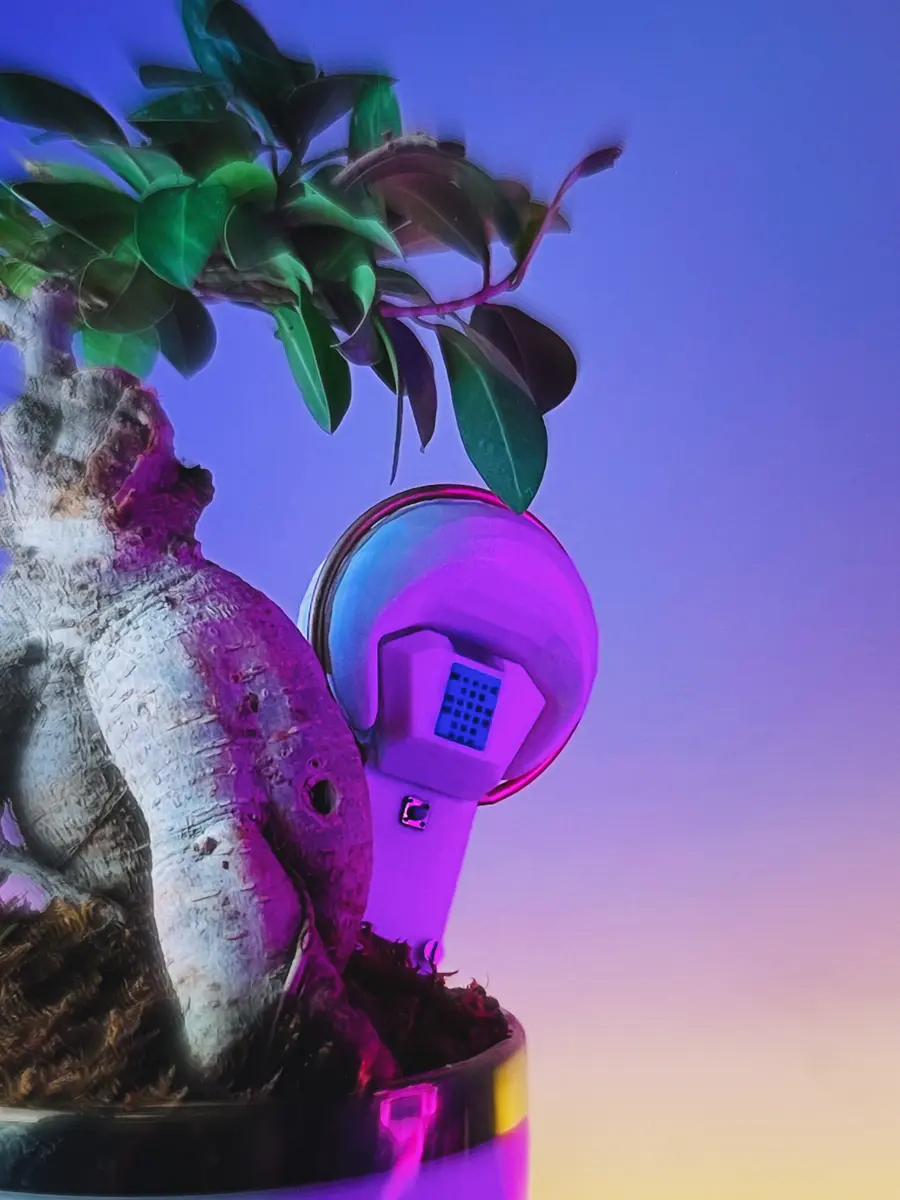
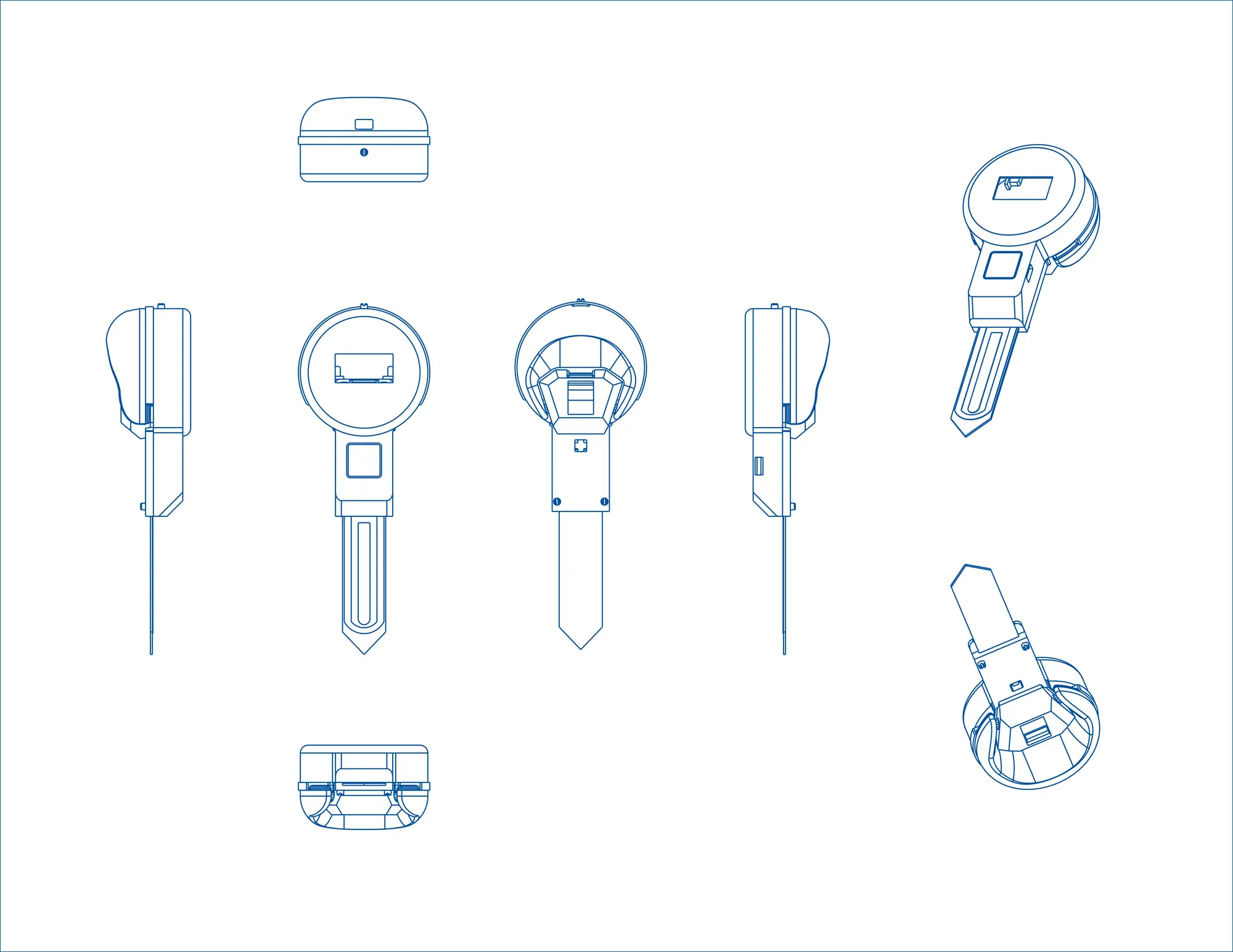
The new architecture turns a one-off connected planter into a reusable tool: a soil probe below, a readable circular display above and a rotating solar module between them.
A geared shaft lets the solar enclosure rotate toward available light.
A rechargeable LiPo system extends time between plug-in charges.
The OLED connects a phone to the local Wi-Fi setup flow without hard-coded credentials.
Readings, weather and plant data become suggestions that are easier to act on.
02 / PRODUCT ARCHITECTURE
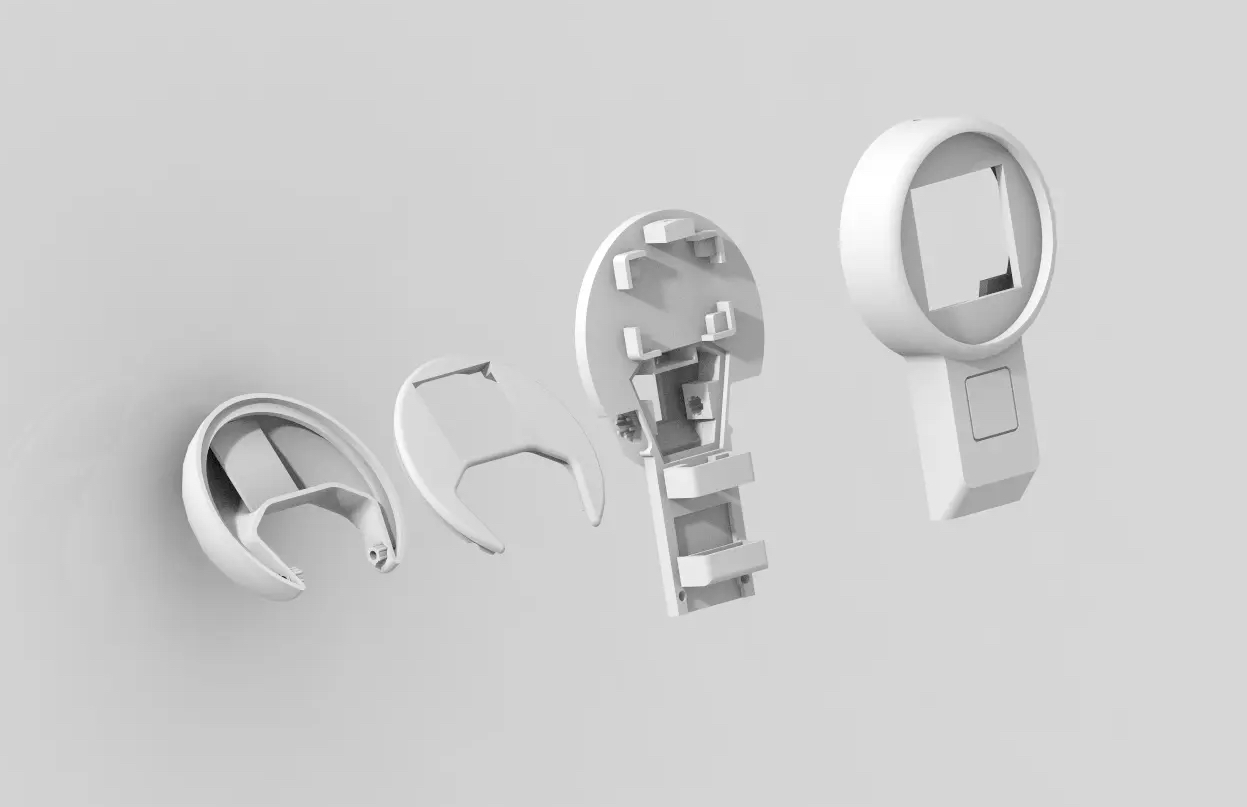
The circular display, outer shell, internal chassis, charging assembly and hinged solar enclosure were developed as one serviceable package. The 1.3-inch OLED communicates sensor values, connection status and battery state; a touch input wakes the device, while deep-sleep behaviour reduces idle power.
03 / FROM READING TO RECOMMENDATION
Temperature, humidity, soil moisture and light are uploaded only when readings change. The companion web app visualises each value against a plant’s preferred range, adds local weather and uses Gemini to generate a concise health assessment with next actions.
A Flask and PostgreSQL plant database supports species information through REST endpoints. The device ID and access token connect one physical monitor to its web profile.