Open-source Arduino library · ESP32
EasyESP
Connect
A fast, lightweight Wi-Fi manager for ESP32 projects—built to make first-run setup feel like part of the product, not a configuration chore.
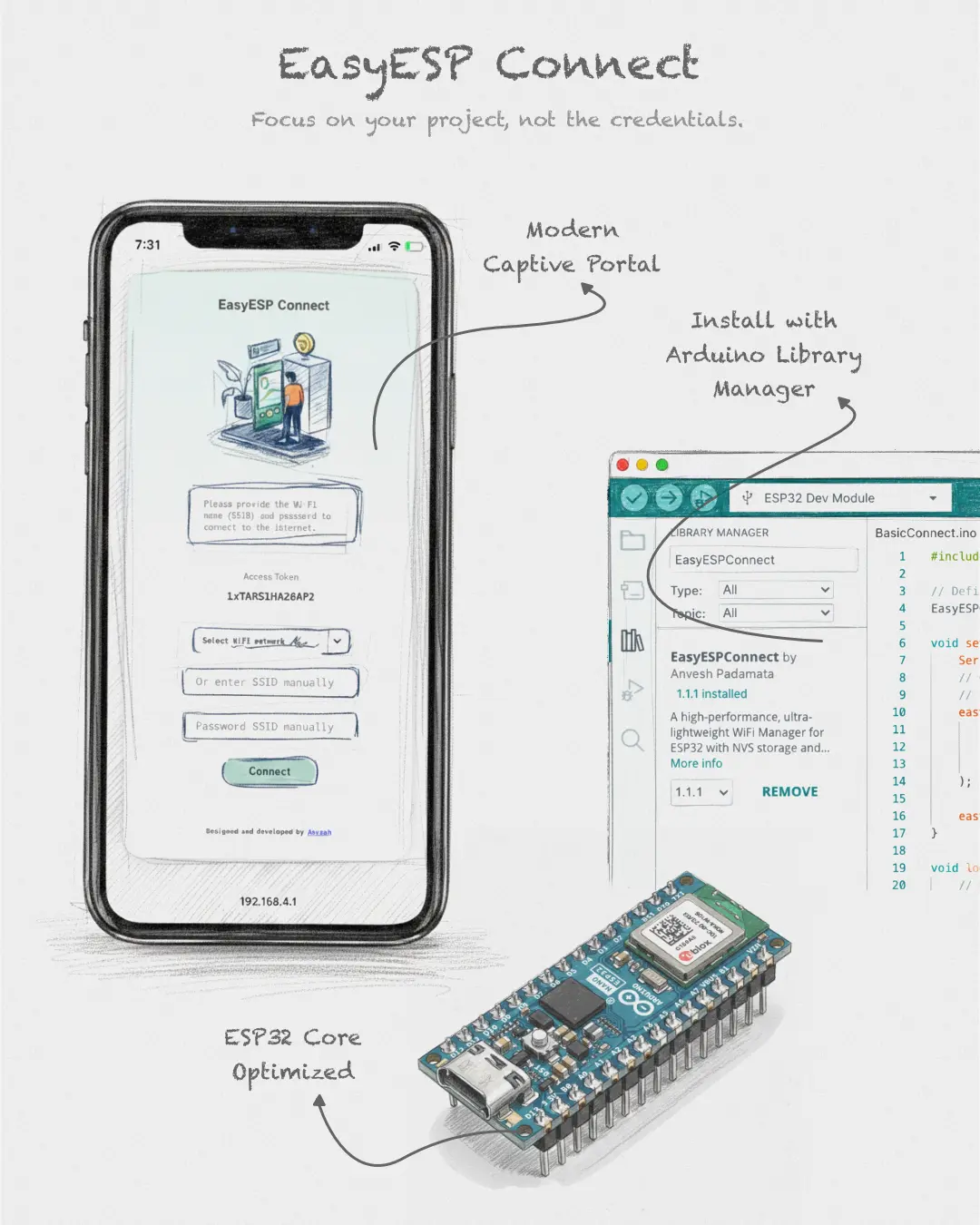
A recurring product problem became reusable infrastructure.
The first Tars used an ESP8266 and a custom access-point flow to collect Wi-Fi credentials. Rebuilding that setup across connected prototypes exposed a broader need: onboarding should be reusable, responsive and should not freeze the rest of the device.
EasyESPConnect carries that lesson into a focused ESP32 Arduino library. It handles discovery, credential storage, reconnection and reset logic while leaving the main application free to do its own work.
01 / THE CAPTIVE PORTAL
Connect without recompiling.
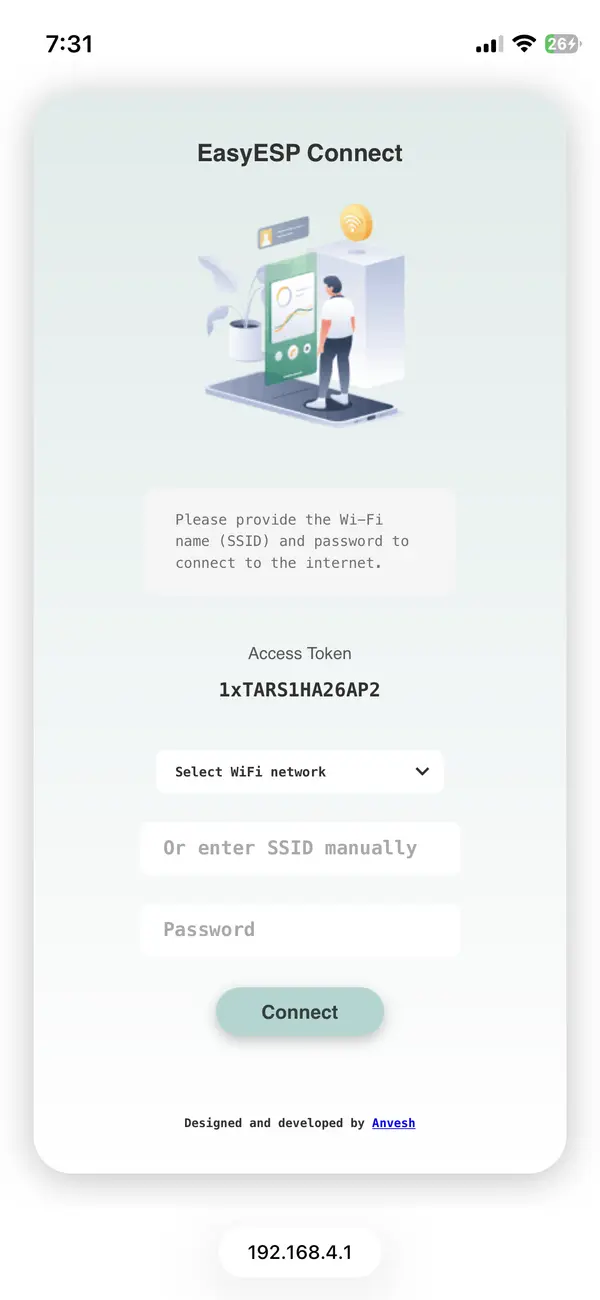
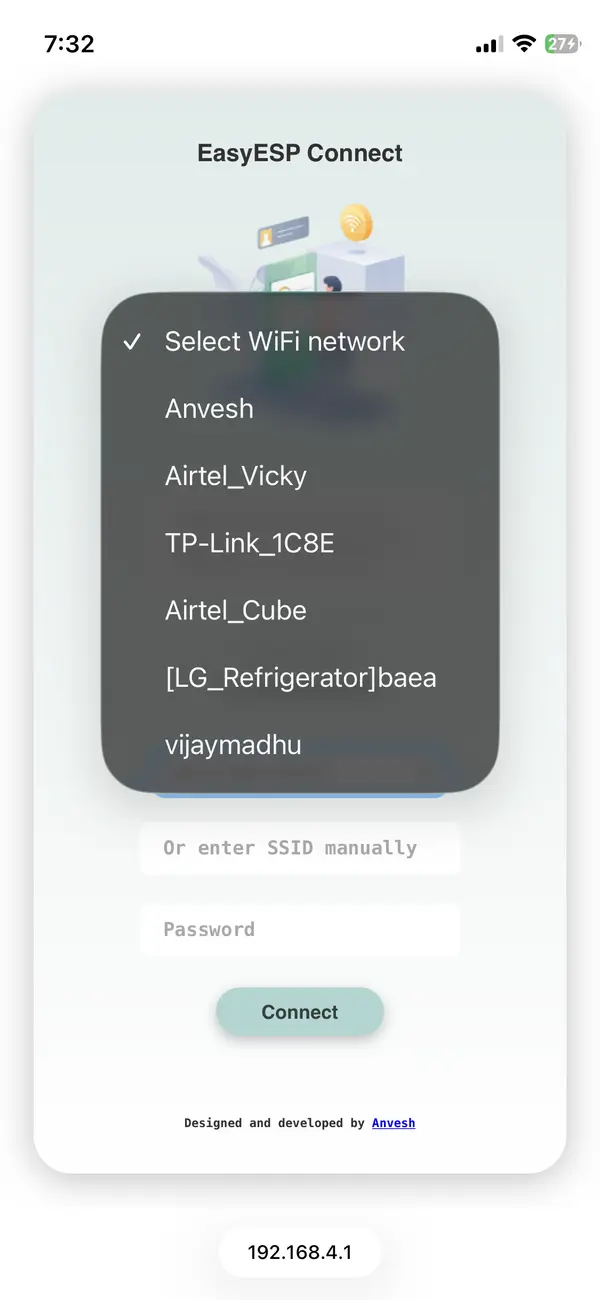
When saved credentials are unavailable, the device presents a mobile-friendly local portal. An asynchronous scanner discovers nearby networks without blocking the interface; the selected SSID and password are persisted in ESP32 Preferences / NVS for the next boot.
02 / BUILT FOR THE LOOP
Wi-Fi management that stays out of the way.
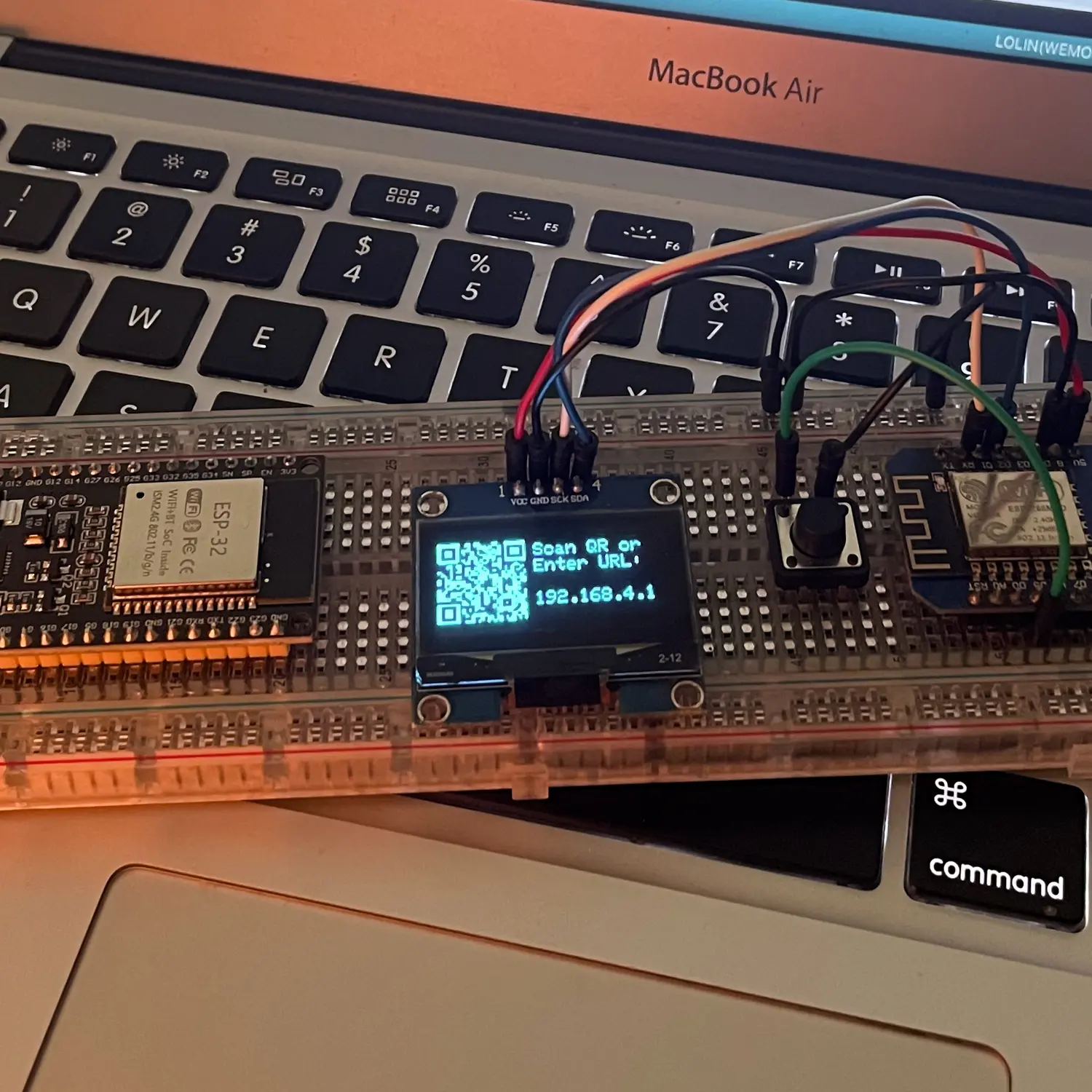
The library favours non-blocking behaviour, including the hardware reset logic, so an Arduino sketch can keep updating sensors, displays or other time-sensitive functions. mDNS adds a memorable local address, while the portal can be restyled to match the product around it.
The result is deliberately narrow: less setup code in each prototype, fewer copied credential flows and a better first interaction for the person connecting the device.
Current release
v1.1.1Architecture
ESP32 · MITInstall
Arduino IDE Library Manager