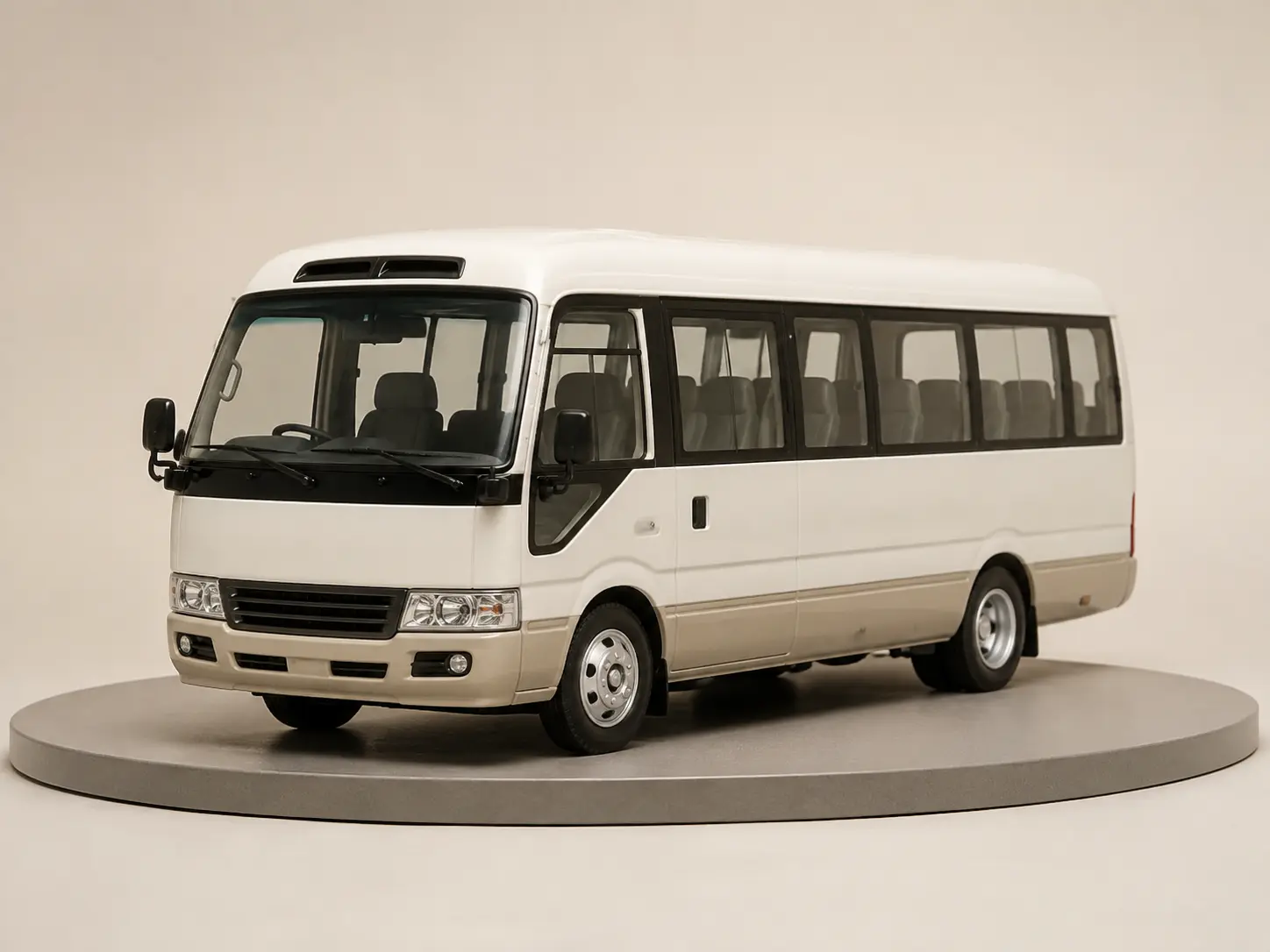
Toyota Coaster
Efficient passenger packaging and proven bus proportions.
CONCEPT VEHICLE DESIGN · AUTOMOTIVE & MECHANICAL DESIGN · DUBAI/UAE
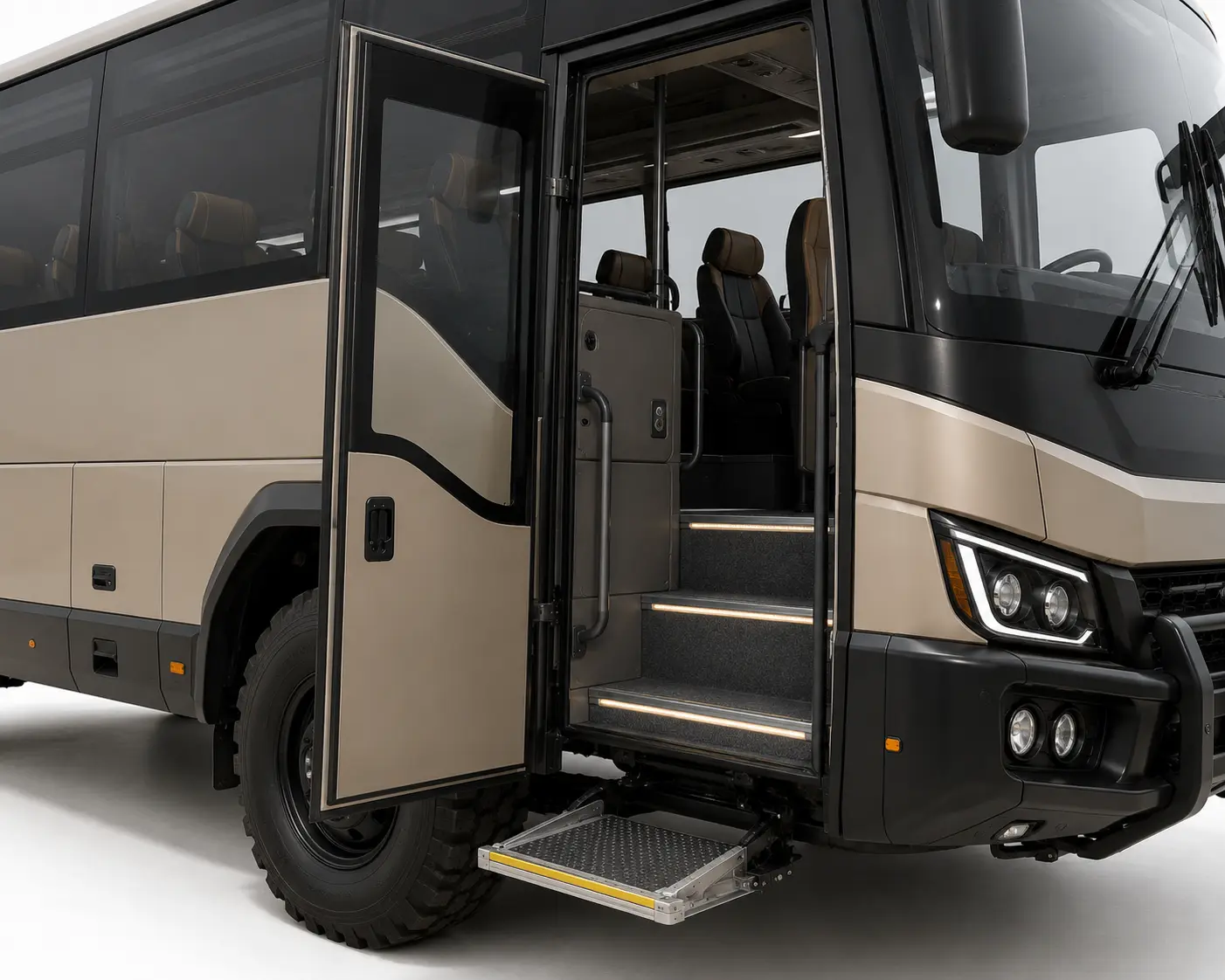
An 18-seat passenger concept developed for Dubai's urban, resort, and desert environments.
 ++
++DIMENSIONS ARE CONCEPT TARGETS — NOT OFFICIAL SPECIFICATIONS
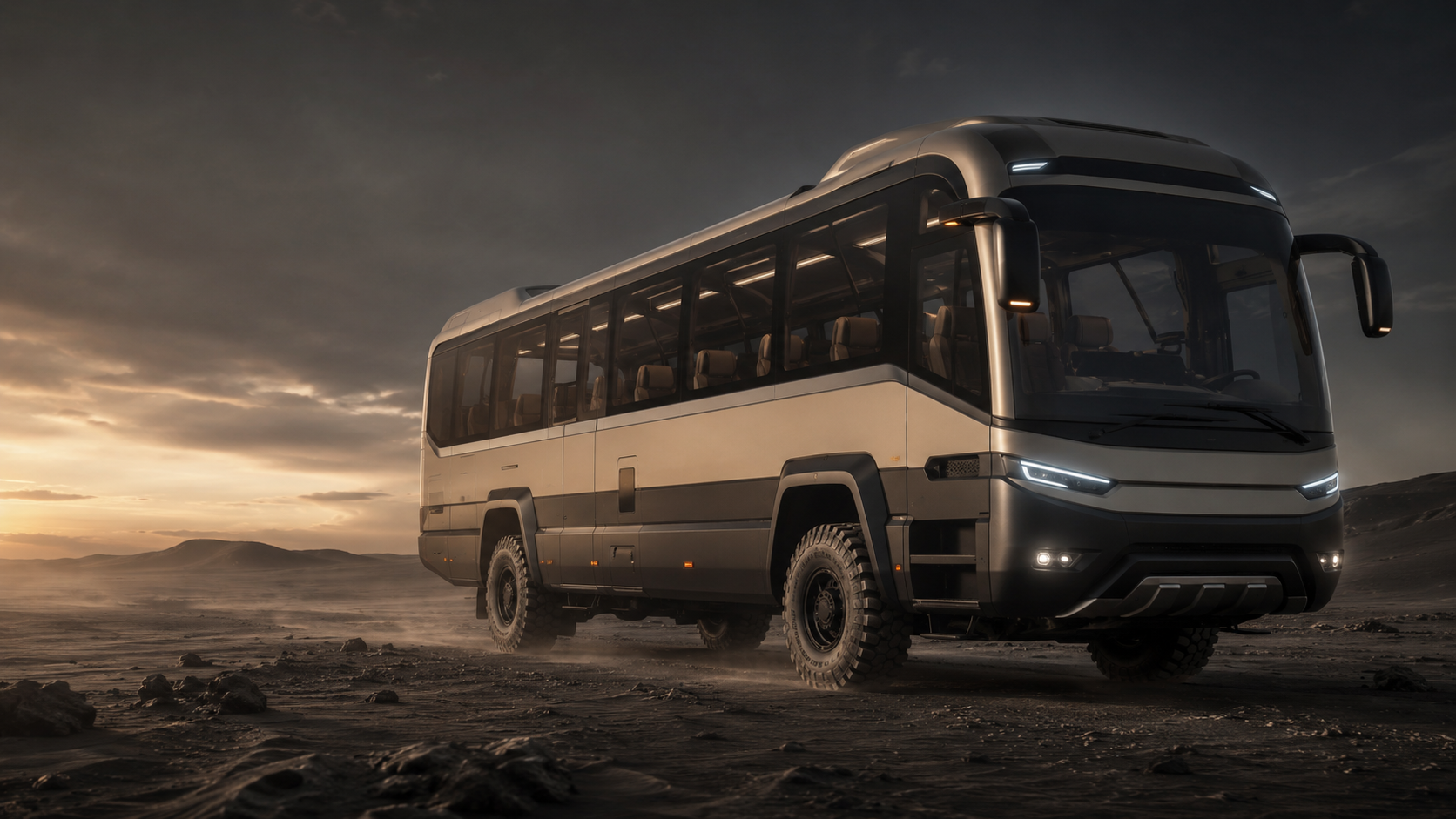
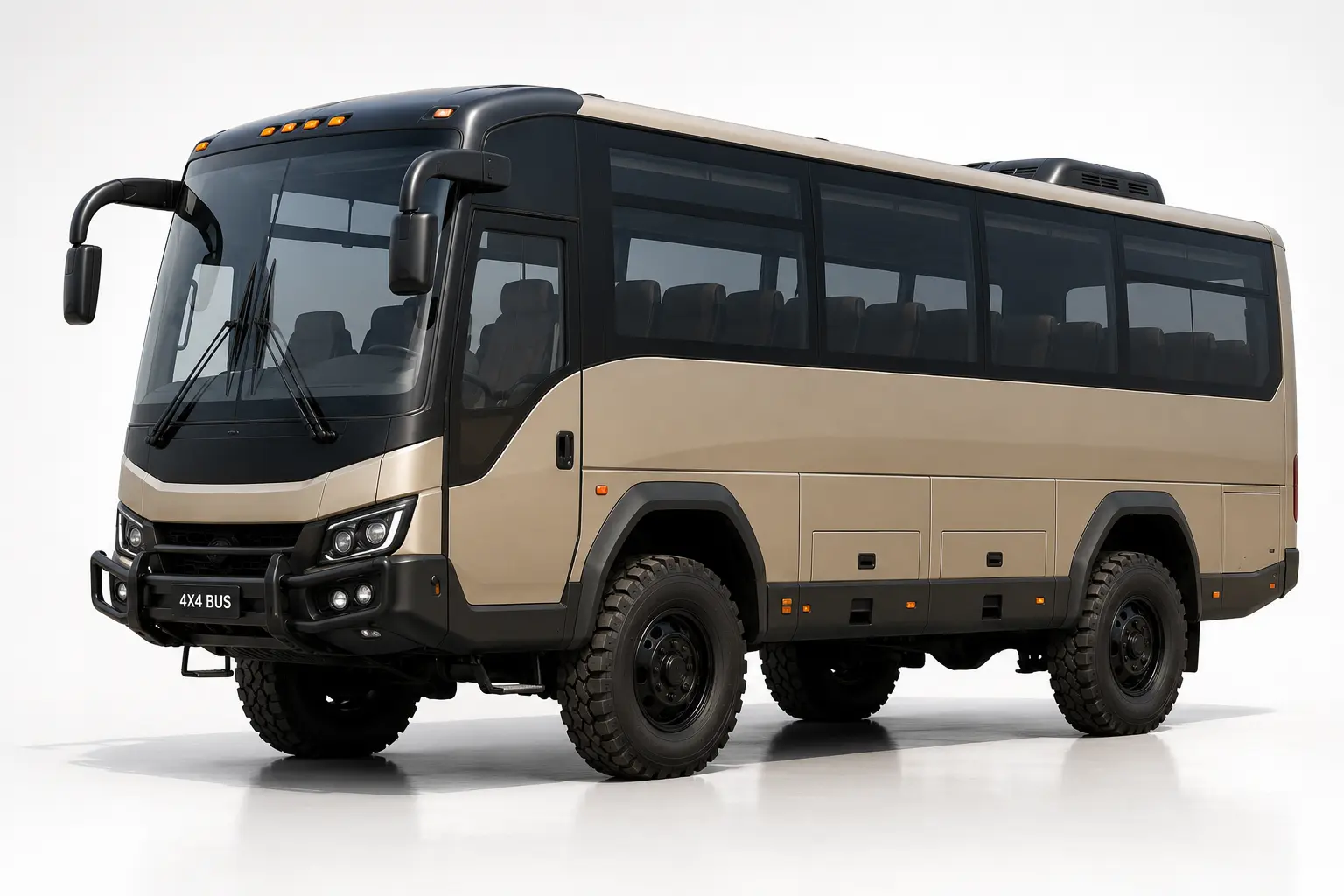
Design a concept 4×4 bus for the Dubai market, with approximately 18 passenger seats and a visually distinctive—but technically credible—identity.
How can an off-road-capable vehicle transport passengers comfortably while still feeling premium enough for Dubai's tourism environment?
Comfortable and space-efficient
LIMITED OFF-ROAD CAPABILITYCapable and terrain-ready
LIMITED PASSENGER COMFORTTHE RESPONSE
The concept was grounded in existing commercial passenger and 4×4 platforms. Each reference contributed a specific lesson—not a styling template.
Efficient passenger packaging and proven bus proportions.
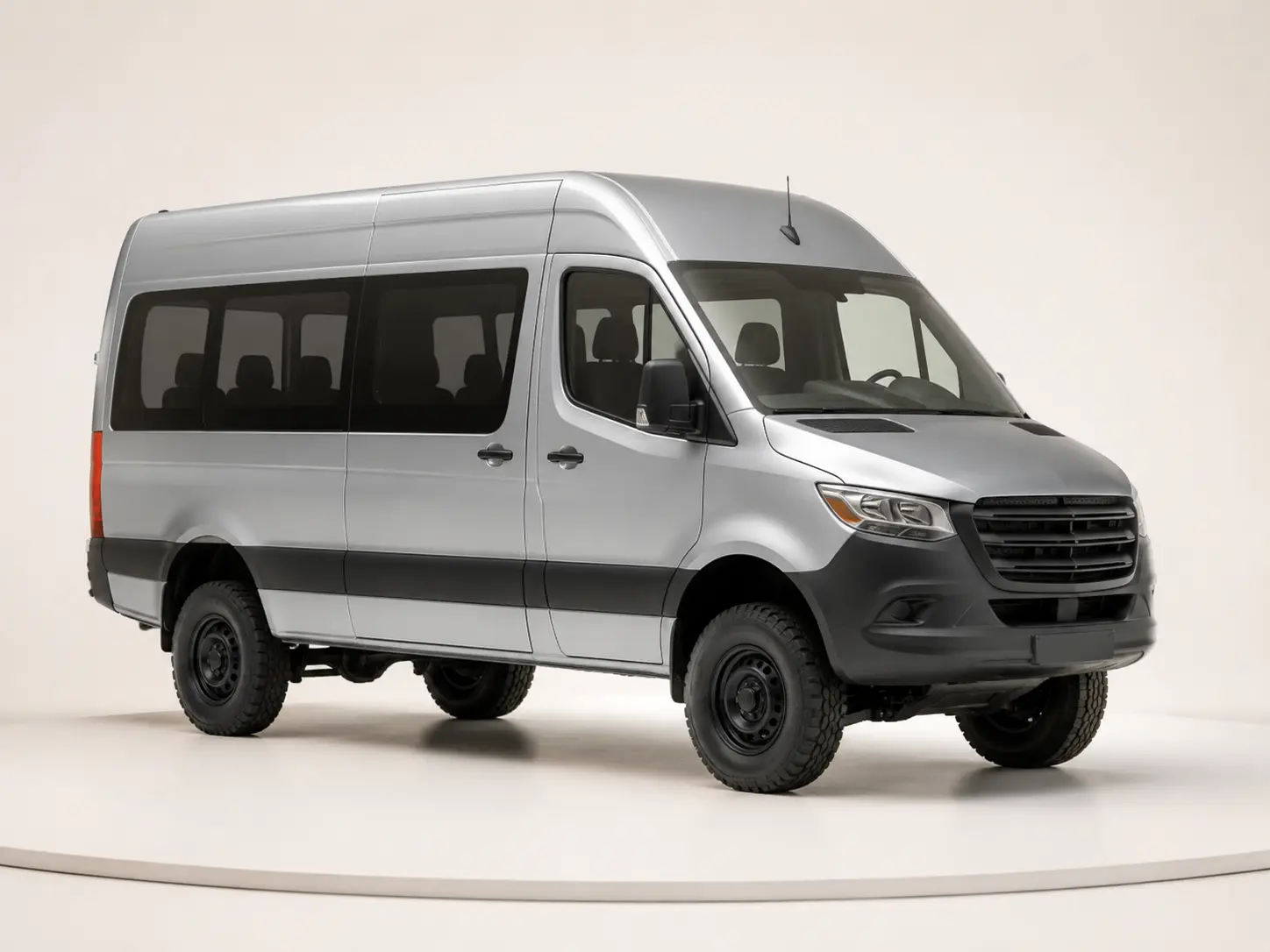
Reference for 4×4 packaging and commercial component logic.
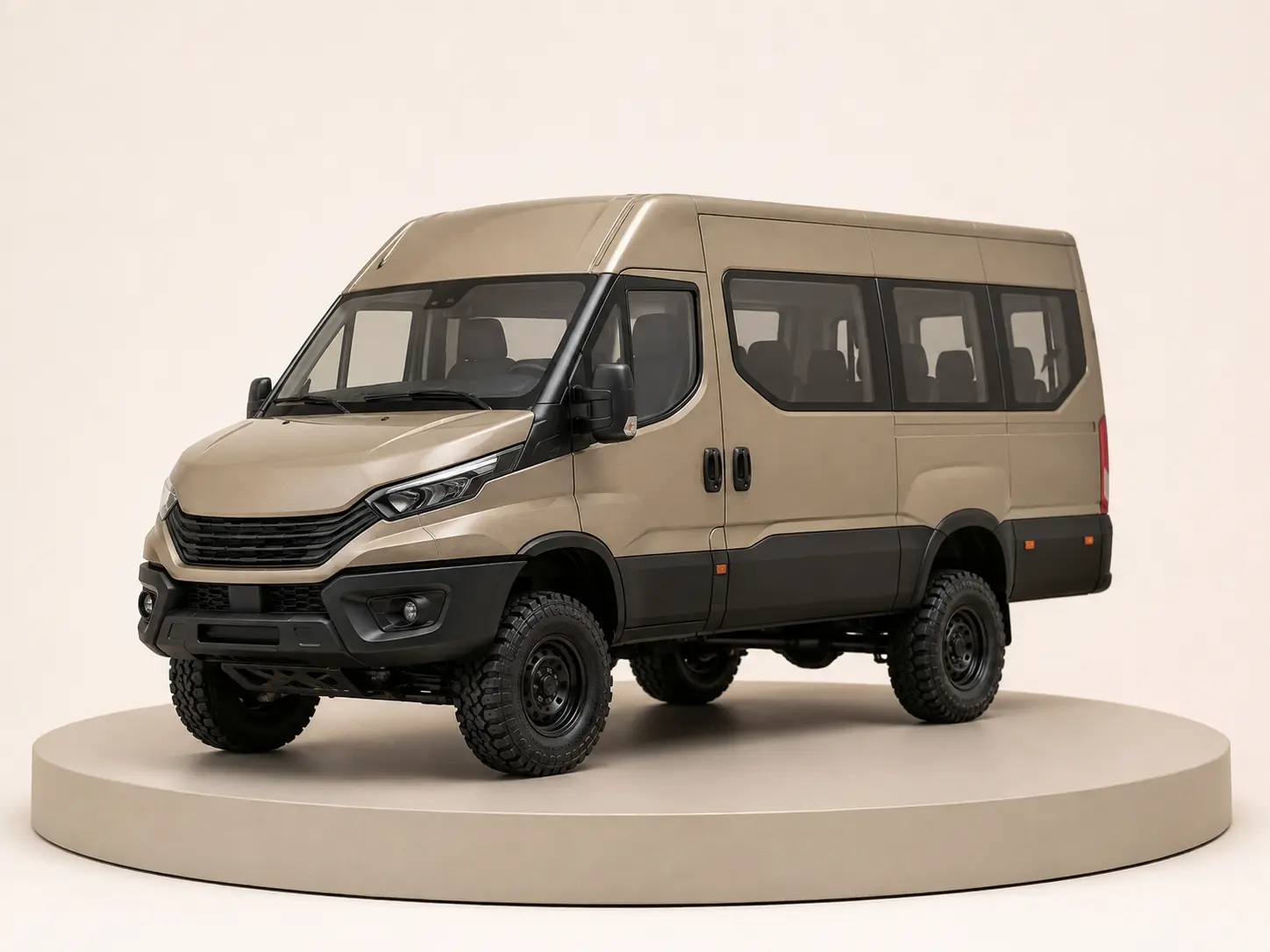
Heavy-duty drivetrain architecture and authentic off-road stance.
Passenger
Environment
Climate
Capability
Experience
Engineering
4×4 · high clearance · all-terrain tyres · underbody protection
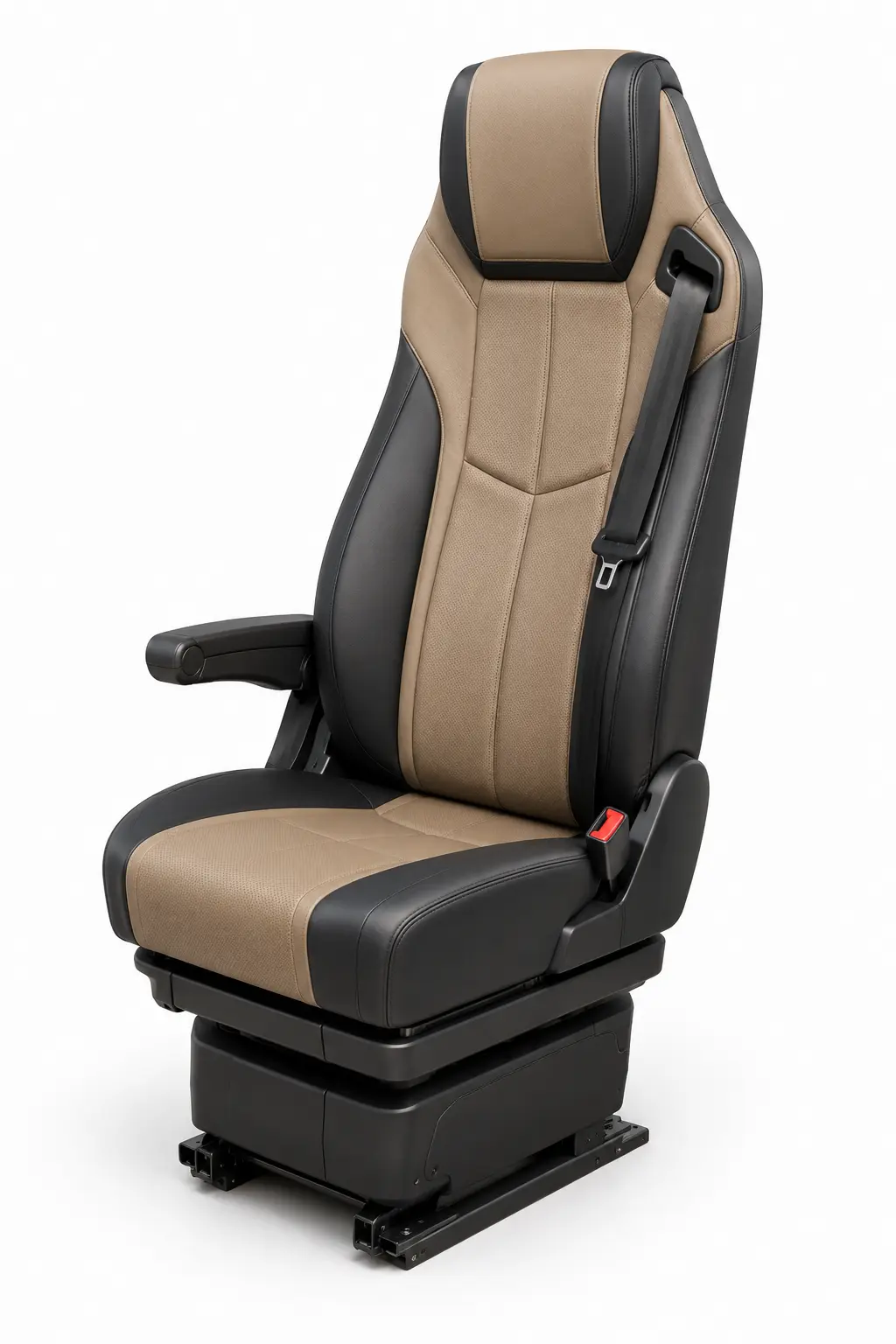
Premium seating · panoramic glazing · high-capacity HVAC · low NVH
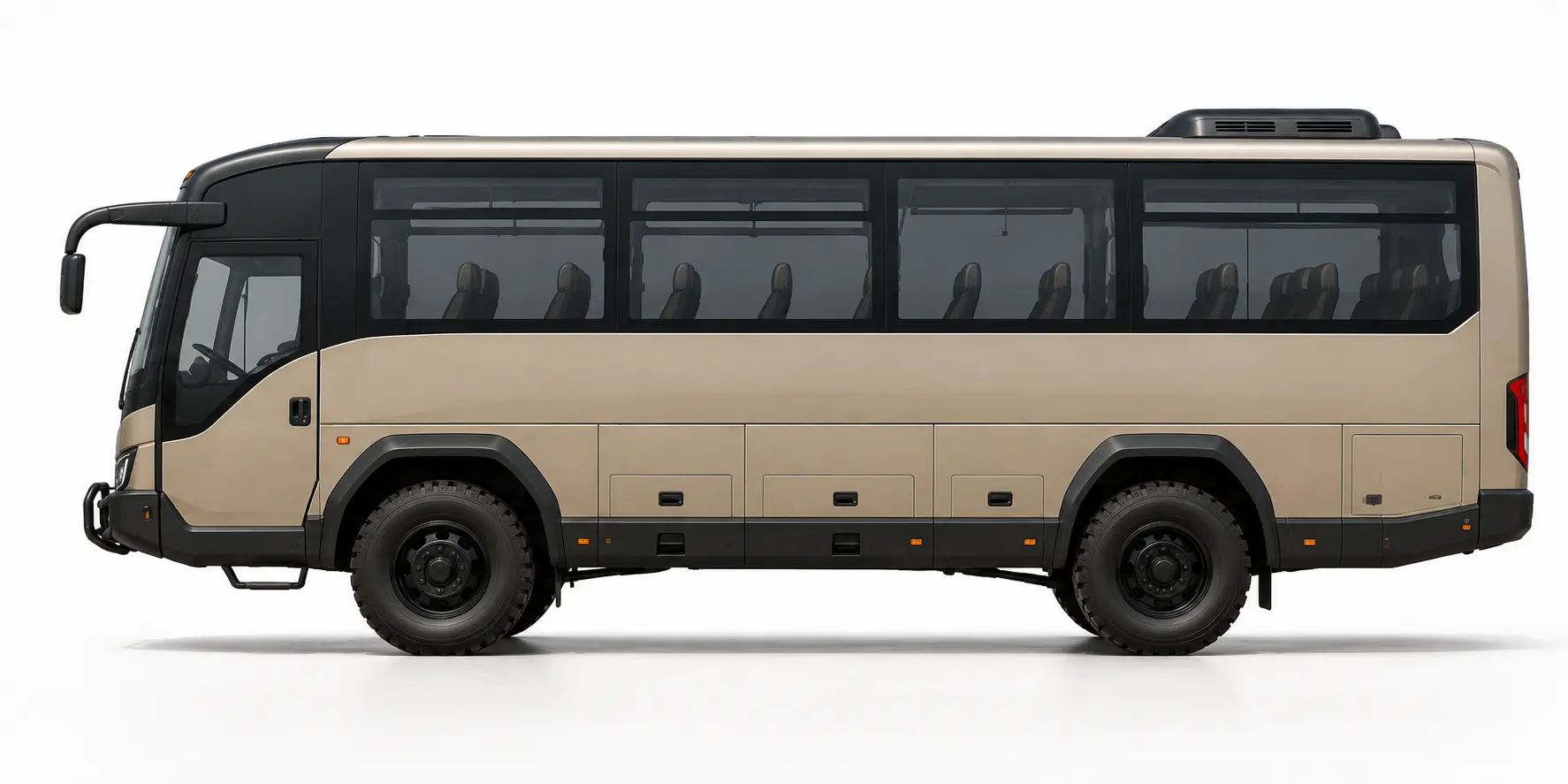
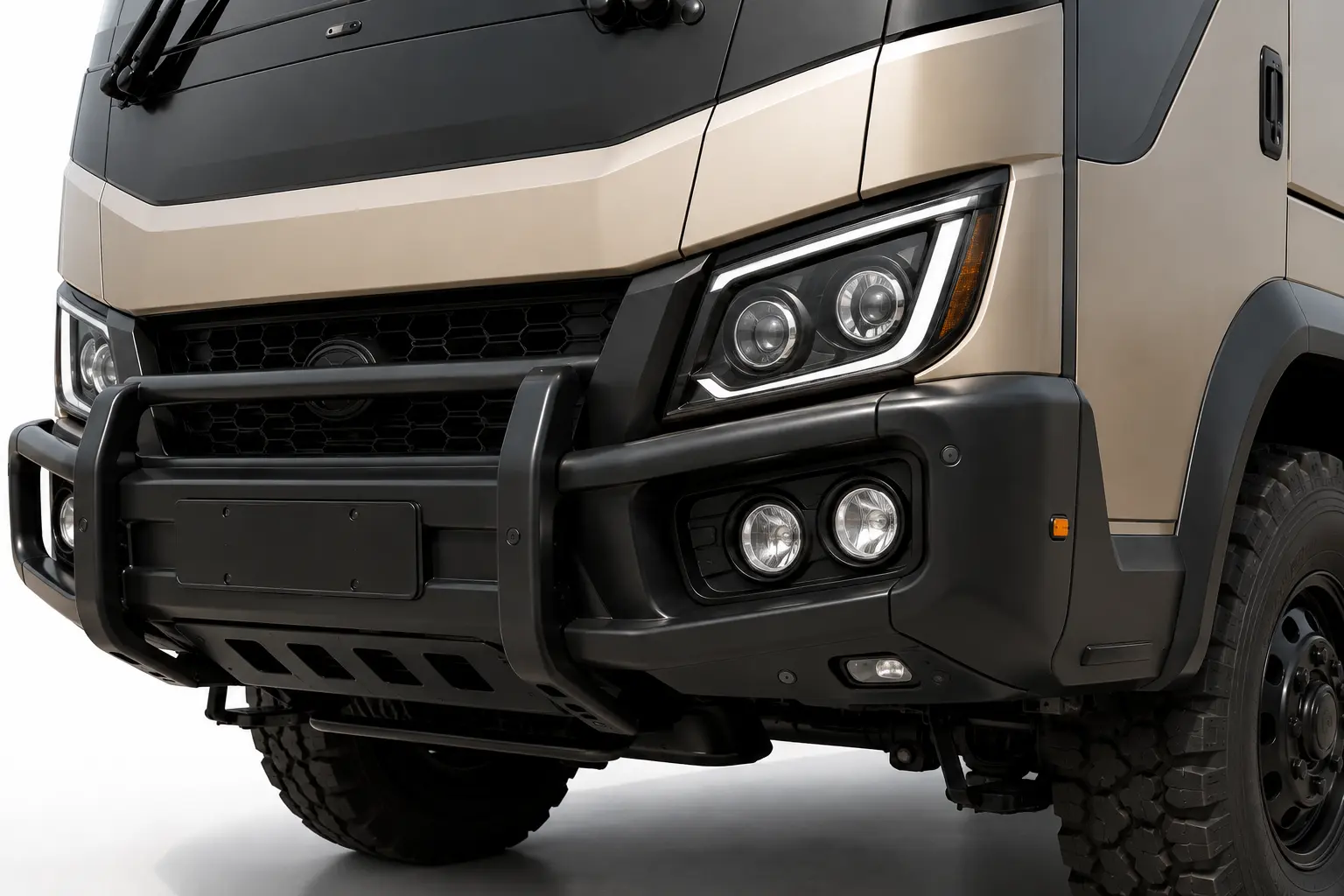
Champagne body · charcoal glasshouse · signature lighting · geometric fascia
The design intentionally avoids the appearance of a conventional city bus or a military vehicle. It combines the visual confidence of an off-road vehicle with the proportions and comfort expected from a premium passenger shuttle.
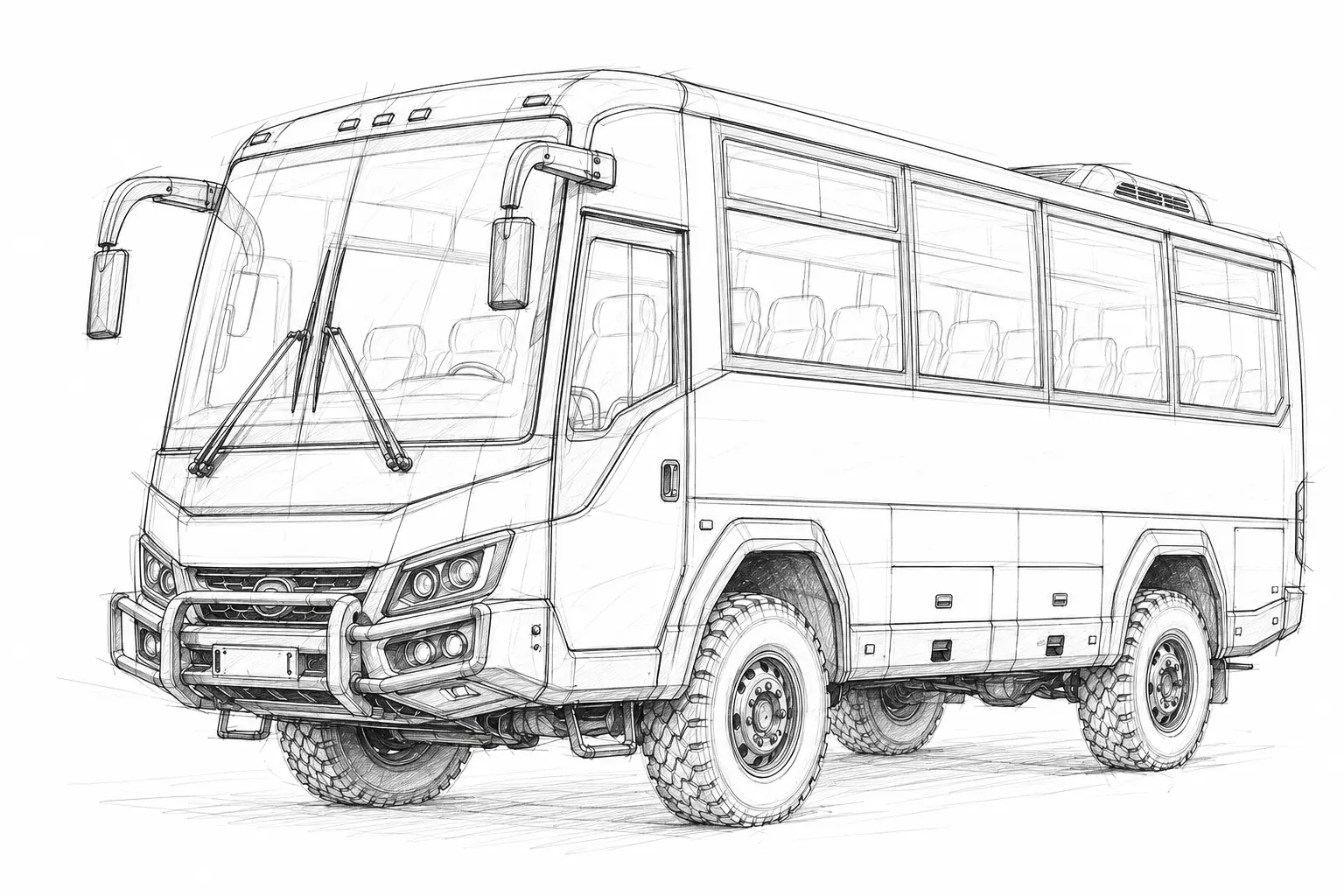 SELECTED DIRECTION · C
Strong capability cues, but the posture became too military for premium tourism.
Refined and calm, but too close to a conventional coach and weak in terrain identity.
The most credible balance of rugged, premium, and functional design priorities.
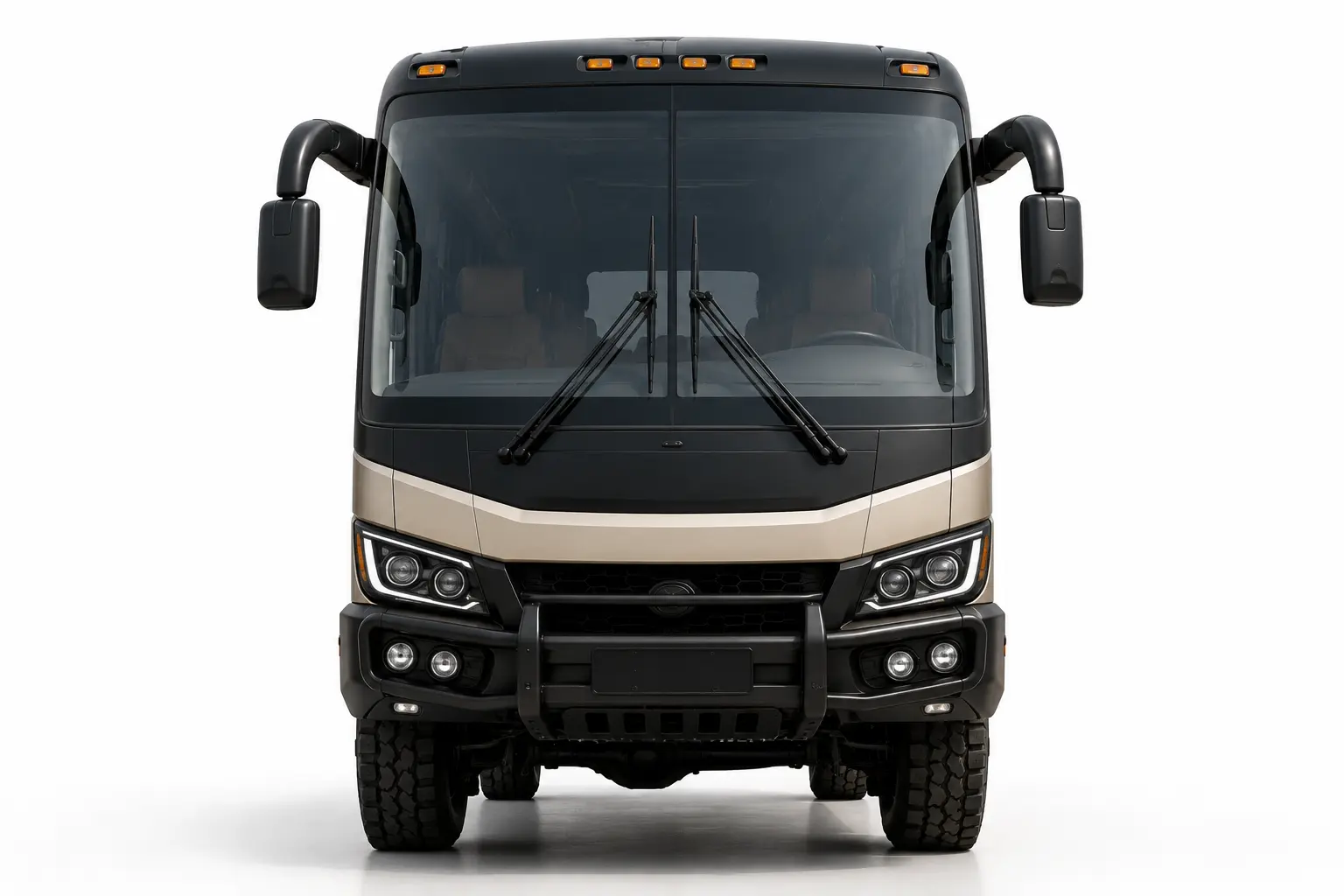
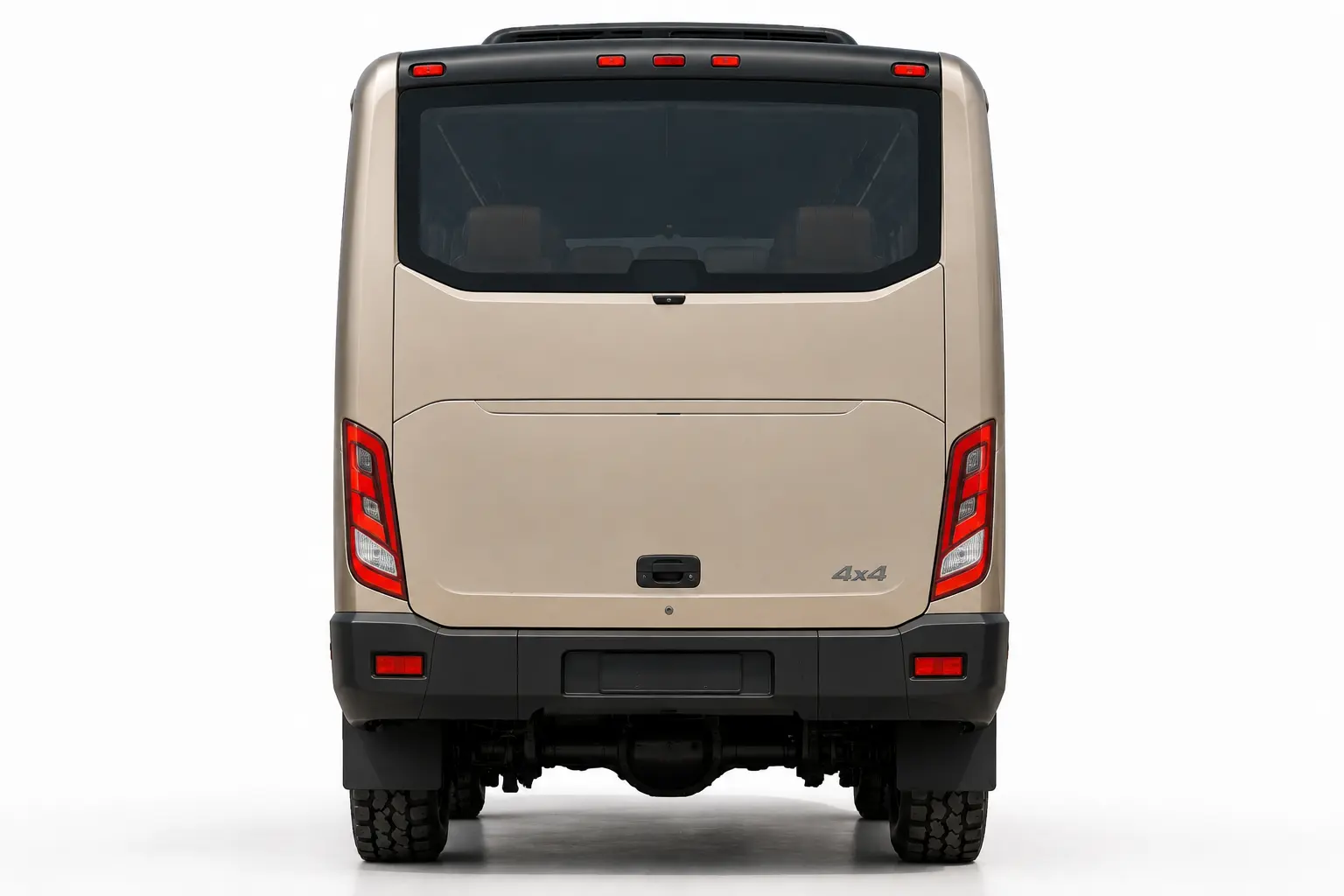
SELECT A FEATURE
A recognizable front identity built around conventional DRL, headlamp, and indicator functions.
Dubai, desert landscape, hospitality, and premium character.
Technology, protection, service interfaces, and mechanical hardware.
Windshield, side windows, and rear glass read as one visually lower passenger capsule.
The body architecture was developed around the drivetrain—not treated as a styling shell with four-wheel drive added later.
Engine → transmission → transfer case → front differential + rear differential
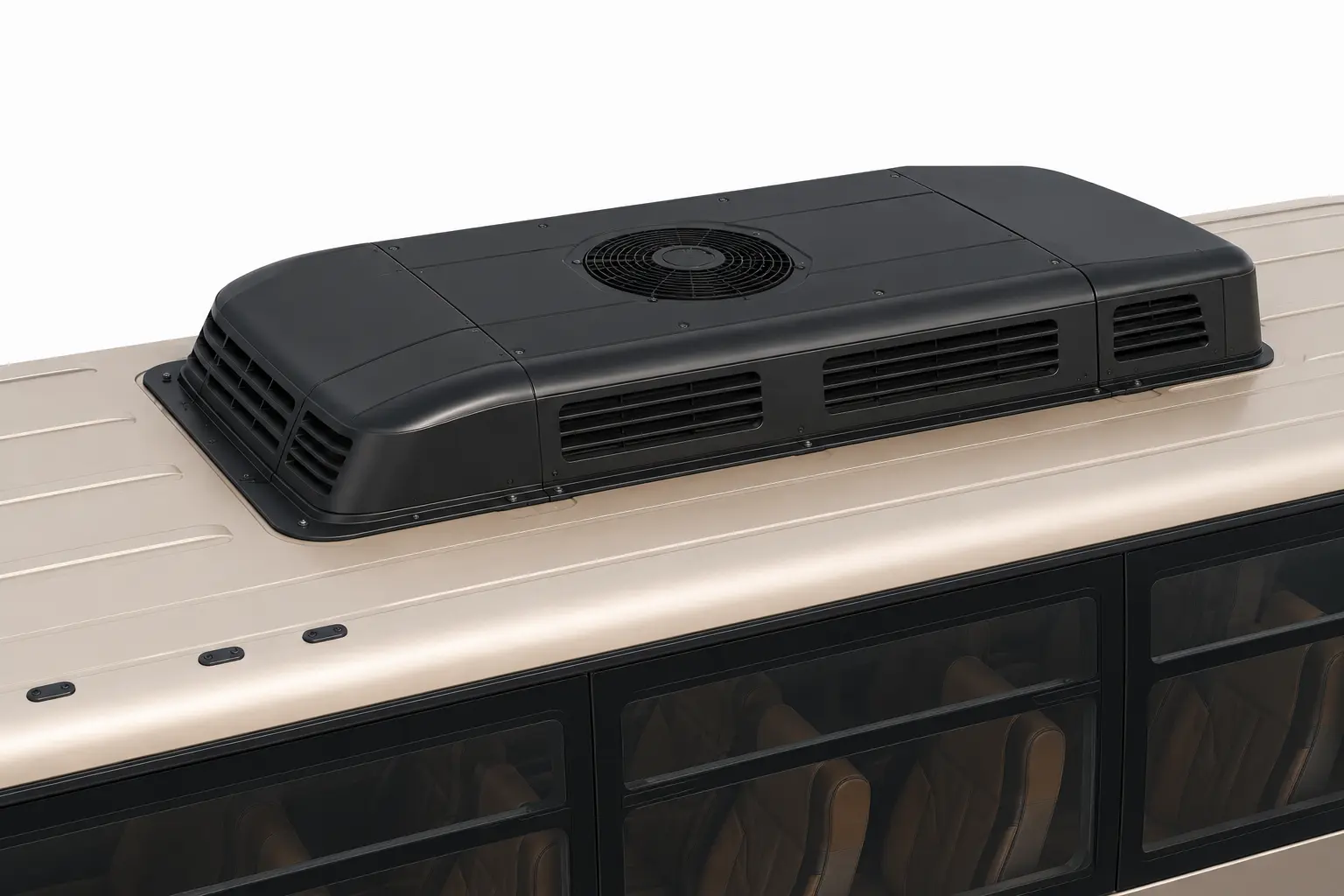 01 / HEAT
 03 / TOURISM
Visibility
Safety glazing
Emergency
Restraints
Fire
First aid
Interior
Dubai RTA bus requirements, UAE/GCC vehicle standards, and applicable vehicle type-approval requirements.
Concept design only. Final compliance requires detailed engineering, homologation, and RTA approval.The vehicle is intentionally planned around established commercial systems wherever possible—reducing tooling, validation, development time, and spare-parts complexity.
Mirrors
Lighting
HVAC
Seats
Glass
Braking
Procure / engineer
Fabricate
Glass · lights · doors
Seats · floor · HVAC
Electrical + mechanical
Thermal · structural · durability
Transfer case, prop shafts, differentials, suspension travel, and service access compete for the same underfloor volume.
Added capability increases mass and axle load while passenger, luggage, HVAC, and glazing payload must be protected.
A large glazed passenger cabin creates a demanding pull-down and steady-state cooling requirement.
More visibility improves the experience but raises heat gain, mass, optical, and tooling challenges.
Off-road torsional loads can drive fatigue, seal, fit, and NVH problems through the custom body.
2–3 weeks
2–4 weeks
6–12 weeks
Parallel
3–6 months
2–4 months
TIMINGS ARE CONCEPT-DEVELOPMENT ESTIMATES — NOT A PRODUCTION COMMITMENT